


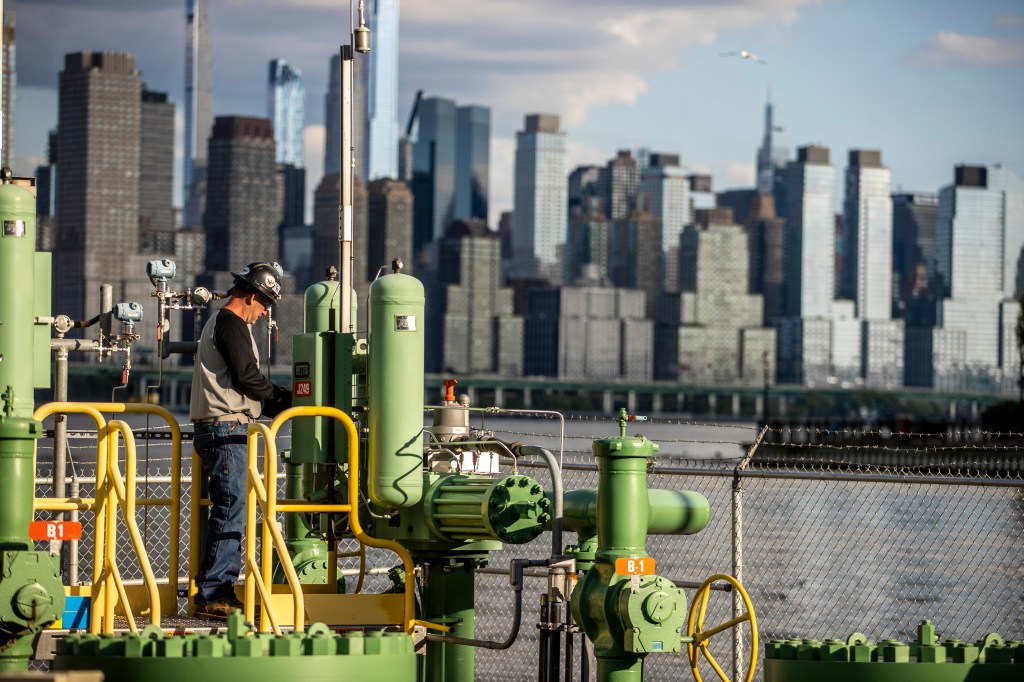
When Transco was placed into service in 1950, it was hailed as the longest pipeline in the world and the largest single-project construction venture ever attempted.
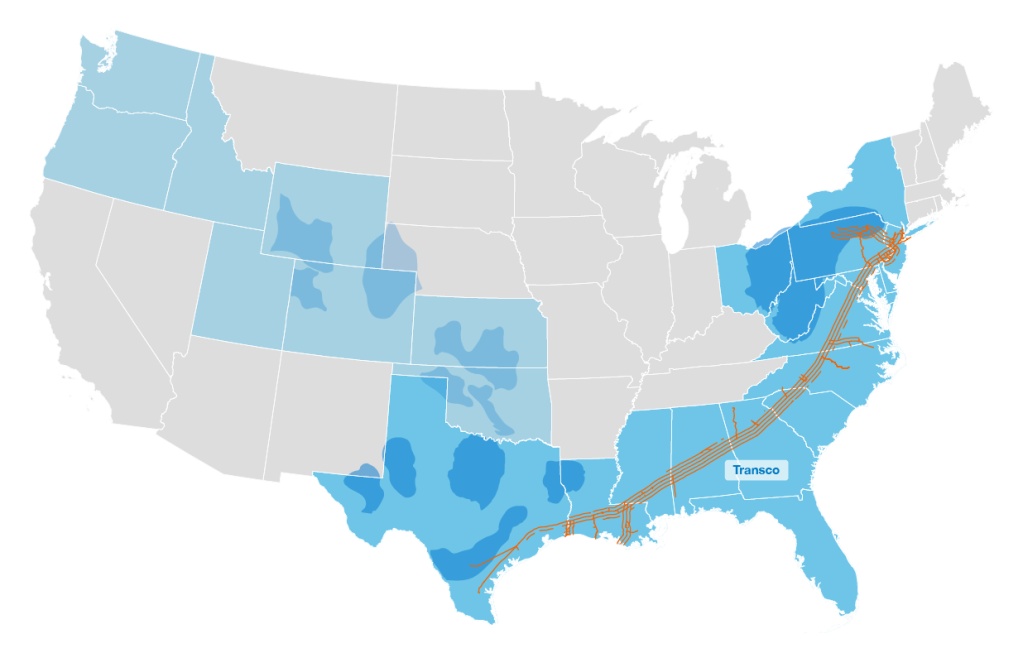
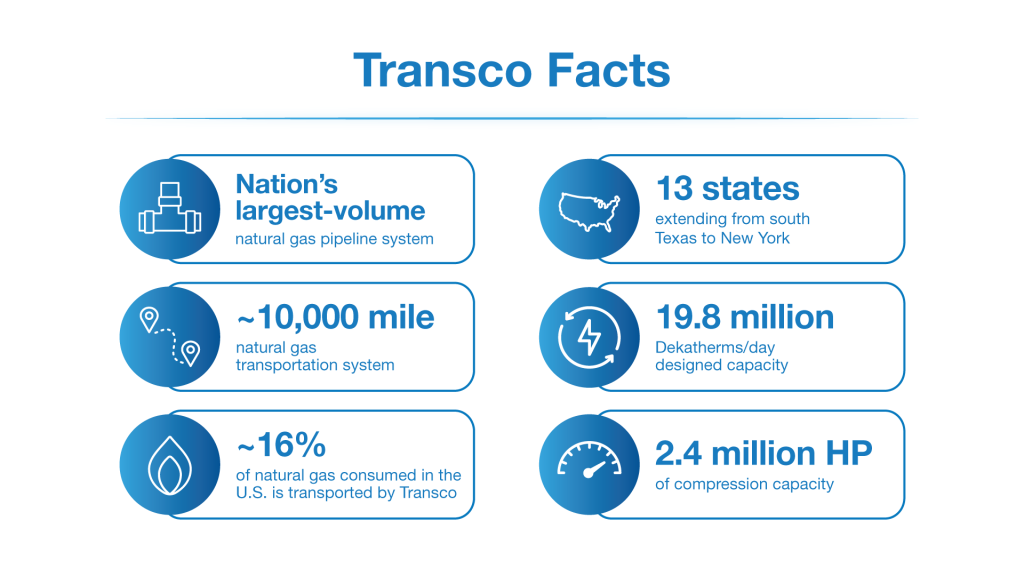
Today, Transco transports about 16 percent of the natural gas consumed in the United States. More than a single pipeline, Transco is a network stretching nearly 10,000 miles, connecting South Texas to New York.

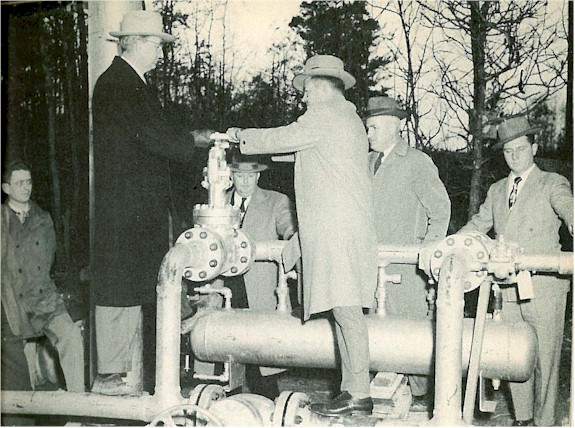
Transco pride
Williams acquired Transco Energy Company in 1995, expanding its natural gas transportation system to the East Coast and cementing Williams as one of the nation’s largest-volume transporters of natural gas. Today, Williams delivers about half of the natural gas consumed in New York City.
Over the decades, thousands of employees have supported Transco’s operations along its 13-state route, including one who spent most of his 54-year career at North Carolina’s Station 160 before retiring in 2023.
“I saw a chance to better myself with a job at Williams, and it’s been a great career,” said Jack Crowder, who added every day was an opportunity to solve challenges.
Jake Davis started working along Transco earlier this year, but his family’s connection stretches back four generations.
His great-grandfather helped build Transco in the 1940s and his grandfather and father were welders at Station 190 in Ellicott City, Maryland, where Davis is now an operations technician.

“There is so much pride in Transco and the role we are playing today to fuel the future,” he said. “I’m excited to start my career here and be part of that legacy,” he said.
Crowder and Davis are just two examples of the dedication found throughout Transco’s history, said Glen Jasek, Vice President of Eastern Interstates.
“The spirit that built Transco – empowering our people, uplifting communities and earning the trust of our customers – continues to drive our team today,” Jasek said. “Our employees’ collaboration and creativity in solving challenges, courage to embrace new opportunities and drive to remain competitive have propelled us forward, and I’m proud to be a part of this team.”

Transco through the years
- 1950: First gas delivery to Danville, Virginia (December), and to New York City a month later
- 1957: Constructed the first offshore pipeline in the Gulf of Mexico
- 1962–63: Developed underground storage in Pennsylvania and LNG storage in New Jersey
- 1970s–1980s: Expanded operations, ventured into exploration and coal, and later became an open-access pipeline system
- 1983: 64-story Transco headquarters building opens in Houston
- 1995: Williams acquires Transco Energy Company
- Recent decades: Multiple expansions to meet growing demand, including 2025 projects like Alabama Georgia Connector and Commonwealth Energy Connector.

Powering the future
Delivering safe, reliable energy to homes and businesses is a priority for Williams.
Transco’s network undergoes rigorous maintenance and inspection, and compressor stations that move the gas are being upgraded through Williams’ Emissions Reduction Program
Meanwhile, coal-to-gas switching in the power sector has resulted in every state served by the Transco pipeline experiencing a decline in CO₂ emissions.
The pipeline system has seen multiple expansions and modernizations to meet rapidly growing energy demand, driven by electrification, global demand and AI technology.
Transco’s story is far from over, said CEO Chad Zamarin. Planned expansion projects such as Northeast Supply Enhancement and Southeast Supply Enhancement are designed to connect customers with the best supplies, ensuring affordable, reliable energy for generations to come.
“You can think about Transco like the largest highway system in our country with respect to natural gas, and it’s got the highest speed limit and some of the lowest tolls.” CEO Chad Zamarin