Affordable energy for New York is within reach.
Constitution Pipeline is a commonsense solution to rising energy prices, delivering reliable, low-cost
energy to homes and businesses across the Northeast.
Why Albany needs to support Constitution Pipeline:
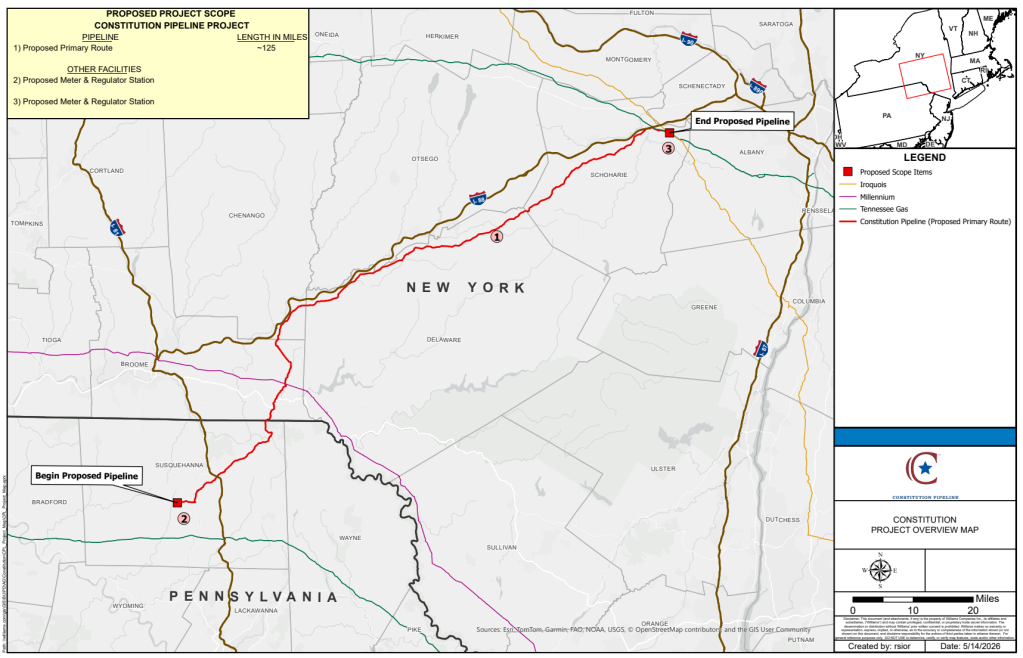
- Constitution Pipeline addresses the root cause of high energy prices: Limited infrastructure. This proposed 125-mile natural gas project across Pennsylvania and New York will improve energy delivery throughout the Northeast.
- $4.7 billion in total savings. $165 million in annual consumer energy cost savings. Relieving pipeline constraints is key to providing affordable energy to New York families and businesses.
- $2.1 billion in economic impact. $432 million in state/federal tax revenue. Thousands of union jobs. Constitution Pipeline will generate unprecedented economic benefits.
- Two independent studies confirm it: Constitution lowers energy costs. S&P Global projects $4.7 billion in total savings; a new Daymark Energy Advisors power market analysis finds about $6 billion in savings for New York and New England electric consumers over 20 years.
New Independent Analysis
Read the full Daymark Energy Advisors report here.
Report insights include:
- ~6B in NPV savings for NY & New England electric consumers (2027–2046)
- $800M+ in wholesale energy savings in a single severe winter — like the one the region just experienced
- 163,000 tons of CO2 avoided in one winter by displacing oil-fired generation
Energy Costs Are Rising. New Yorkers Pay the Price.
When energy can’t move efficiently, prices spike. Lowering costs for families, small businesses and communities requires smart, long-term infrastructure improvements.
The practical solution: Constitution Pipeline
Imagine a New York where energy is delivered where it’s needed most. Constitution improves how abundant natural gas moves into New York and the Northeast, unlocking access, increasing reliability and stabilizing prices.

in energy savings, resulting in $165M in annual consumer savings

provided with energy and protected from extreme price spikes

added to New York’s economy, including thousands of union construction jobs
Project Fast Facts
Length
~125 miles
Route
Pennsylvania > Upstate New York
Reach
Enough energy to serve ~3 million homes
Connections
Links existing regional pipeline networks
Safety and Environmental Protections
Building energy infrastructure comes with real responsibilities. Constitution Pipeline is designed to be built and operated under rigorous federal and state oversight, with safety standards and environmental protections intended to reduce impacts during construction and over the life of the project.
- Regulatory review and permits: The project must meet applicable requirements and permit conditions before construction can proceed.
- Route planning to limit disruption: Where feasible, new facilities are planned to avoid sensitive areas and reduce impacts to communities and the environment.
- Construction best practices: Contractors follow required procedures to manage erosion and sediment, protect waterways and wetlands, and control noise, traffic, and dust.
- Restoration after construction: Work areas are restored after construction is complete, including regrading and revegetation consistent with permit requirements.
- Pipeline safety standards: Pipelines are built, tested, and operated to meet federal pipeline safety regulations, with ongoing integrity management and inspections.
- Emergency preparedness: Operators maintain emergency plans and coordinate with local officials to support response readiness.
Supported by Workers, Business and Energy Leaders
A wide range of stakeholders recognize the importance of reliable, affordable energy infrastructure.
- Natural Allies: Recent polling shows New Yorkers support Governor Hochul’s pragmatic approach to energy policy. Learn more.
- S&P Global: In addition to consumer savings, Constitution could generate $432 million in federal and state tax revenues. Learn more.
Constitution Pipeline FAQs
Constitution Pipeline is a proposed natural gas infrastructure project designed to bring reliable energy from Pennsylvania into New York and the broader Northwest.
The project includes approximately 125 miles of pipeline infrastructure, connecting existing energy systems and helping deliver energy where demand is highest. Once operational, it will be capable of transporting enough energy to support millions of homes across the region, helping relieve existing system constraints.
Today, existing pipelines in the Northeast are often operating at or near capacity–especially during peak demand periods.
The Constitution Pipeline is designed to relieve that pressure–helping ensure energy can move efficiently, reliably and affordably across the region.
Bottom line: Better infrastructure leads to efficient, reliable and affordable energy.
Energy costs in New York are high in part because infrastructure can’t efficiently deliver energy where it’s needed. The Constitution Pipeline improves that flow—reducing constraints that drive up prices.
By increasing access and easing bottlenecks, the project is expected to deliver:
$4.7 billion in energy savings for New Yorkers
$165 million in annual consumer savings
Bottom line: Better infrastructure leads to lower, more stable energy costs.
Energy prices spike when supply can’t meet demand efficiently. In New York, limited pipeline capacity has created constraints that drive volatility.
In extreme cases, these constraints have caused prices to surge up to 36 times normal levels.
Bottom line: The issue isn’t a lack of energy—it’s how it’s delivered.
When infrastructure is stretched too thin, the system becomes unstable—leading to price spikes and supply concerns.
The Constitution Pipeline:
- Expands delivery capacity
- Reduces bottlenecks
- Helps stabilize supply during peak demand
It can support energy needs equivalent to approximately 3 million homes.
Bottom line: More reliable delivery keeps costs predictable.
Lower energy costs don’t just help households—they support the broader economy.
The project is expected to:
- Create ~1,000 jobs in New York
- Support ~2,000 jobs annually across the region
- Add $2.1 billion to the state economy
- Generate $432 million in tax revenue
Bottom line: Infrastructure development supports union construction jobs and affordable energy helps businesses grow and communities thrive.
Support comes from a range of stakeholders who understand the importance of affordable, reliable energy:
- Labor organizations
- Business and economic leaders
- Energy and policy experts
These validator voices help demonstrate the real-world benefits of the project and build confidence in its impact.
New York is working to balance affordability, reliability, and sustainability.
The Constitution Pipeline supports that goal by:
- Making energy more affordable today
- Strengthening system reliability
- Supporting economic growth alongside future energy investments
Bottom line: Reliable infrastructure is a foundation for any energy future.