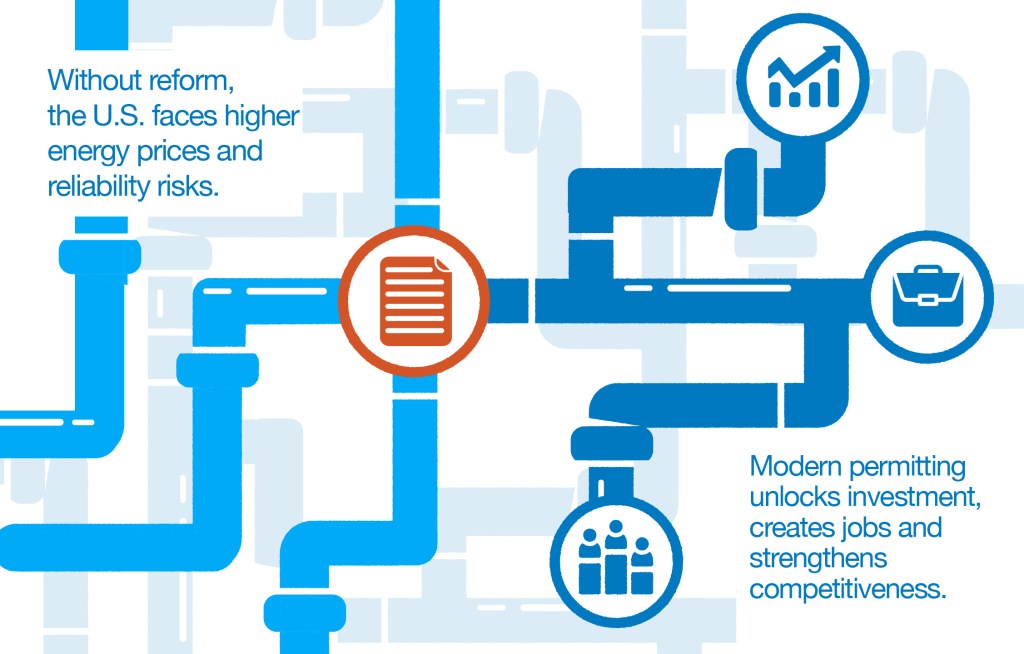
America’s energy demand is surging, but outdated permitting processes are slowing progress, leading to higher energy prices, reliability challenges and slower economic growth, according to a new study by the National Petroleum Council.
NPC’s “Bottleneck to Breakthrough” report calls for predictable, time-bound permitting to unlock investment and strengthen reliability.
Demand pressures have outpaced infrastructure capacity and made permitting reform critical for U.S. energy reliability and competitiveness, said Alan Armstrong, who chairs the NPC and is executive chairman of the Williams Board of Directors.
Build, protect and engage
The study was conducted at the request of Secretary of Energy Chris Wright and recommends a set of solutions to create permitting that is faster, more transparent and legally durable, enabling critical energy infrastructure that maintains environmental protection and public trust.
The report urges action on near-term procedural improvements and challenges lawmakers to explore and adopt a long-term overhaul to create a predictable permitting system balancing three imperatives: build, protect and engage.
Lowering energy prices
Armstrong said infrastructure bottlenecks are driving up consumer prices, particularly in the Northeast.
“It’s very clear to me from my engagement with governors in the Northeast, that they very much understand that the high cost of utility bills is becoming a political issue (regardless) of what side of the aisle it’s on. I think that is going to bring a political momentum to be seeking out solutions that we’ve proposed.”
NPC recommends clear steps: clarify the National Environmental Policy Act, streamline Clean Water Act reviews, enforce Federal Energy Regulatory Commission deadlines and expand categorical exclusions.
Reliable energy
Another NPC study looked at the growing misalignment between natural gas and electric power markets. The electric grid is becoming more dependent on natural gas for dispatchable generation, and gas infrastructure relies on electricity for operations.
These two systems are deeply interdependent, but they’re governed by divergent regulatory, commercial and operational frameworks. This mismatch is an escalating threat to U.S. energy reliability, affordability and security.
The study calls for improved market incentives, operational practices and accountability frameworks to prevent disruptions that can cascade across the grid.
The NPC is a federal advisory committee to the Secretary of Energy. Founded in 1946, the NPC is made up of approximately 200 people selected and appointed by the Secretary of Energy to advise, inform and make recommendations, at the Secretary’s request, on matters pertaining to oil and natural gas or to the oil and gas industries.
Learn more about the NPC and its latest studies at https://www.npc.org.